Why Is my Hair falling out? Hair Loss in Women Explained
I think it is about time for me to write about hair loss.
We are in September, autumn is approaching and soon the leaves will be falling almost as much as your hair. Sadly, I know.
But what first makes us think that our hair is falling out?
Most of the time, it starts with finding more hair in our brush, on our clothes, around the shower or, as I often joke, your other half noticing it everywhere.
Jokes aside, once you notice it, it can become difficult to think about anything else, can't it?
Your first instinct might be to search for the **best shampoo for hair loss**, order supplements or stop brushing altogether. I completely understand wanting to do something straight away. But before choosing a product, we first need to understand what might be happening.
As a student of functional naturopathy, I am learning to look beyond an isolated symptom. Even if a shampoo could benefit your hair in many ways, it would not necessarily explain or address the reason behind it. Your hair health can reflect your wider health, so a noticeable change is something worth investigating rather than simply covering up.
As a hairdresser with more than sixteen years of experience, I care about helping you make informed choices. Hair loss in women can have several causes, and the condition of the hair itself tells us only part of the story.
The short answer
Hair can fall out because of normal shedding, a temporary disruption to the hair-growth cycle, female pattern hair loss, hormonal changes, illness, stress, nutritional deficiencies, certain medications, scalp conditions or repeated tension from hairstyles. Sometimes more than one factor is involved.
The pattern matters. Sudden shedding, gradual thinning, bald patches, a receding hairline and broken strands do not necessarily have the same cause. Understanding what has changed, and when, is far more useful than immediately buying a product.
How much hair loss is normal?
Shedding around 50 to 100 hairs a day is commonly considered normal. Hair naturally renews itself, so finding some loose strands does not automatically mean something is wrong. [American Academy of Dermatology]
That number is a guide, not an invitation to count every hair each day. Pay attention to changes from YOUR usual pattern instead: a noticeably smaller ponytail, a more visible scalp, a parting that seems to be getting wider or shedding that continues to increase.
Trust your instinct. You know your hair. If something feels different, it is okay and reasonable to ask for advice.
How does the hair-growth cycle work?
Each follicle follows its own "hair-growth cycle". In simple terms, hair grows, passes through a short transition, rests and eventually sheds. The growing stage is called "anagen", the transition stage "catagen" and the resting stage "telogen".
Because follicles are at different stages, some hairs fall while others continue growing. Shedding a hair does not mean that you have lost the follicle producing it.
This is also why a change in your health may take time to become visible in your hair. What you notice today may relate to something that happened several weeks or months ago.
Is it normal to lose more hair in autumn
Some people notice more shedding towards the end of summer or during autumn, and hair shedding can naturally fluctuate. But I would never automatically dismiss significant hair loss as "just seasonal."
If the change is dramatic, continues for several months, creates visible thinning or comes with scalp discomfort, it deserves proper attention. Autumn may be when you notice the change, but it does not necessarily explain the cause.
Is it hair shedding, thinning or breakage?
These can look similar at first, but they describe different changes:
- Excessive hair shedding:more hairs are being released from the scalp than usual. A common cause is telogen effluvium.
- Hair thinning:the hair gradually appears less dense. You might notice a wider parting or a smaller ponytail without seeing dramatic handfuls of hair.
- Hair breakage: strands snap along their length, leaving shorter pieces, uneven ends or a fragile feeling through the lengths.
Shedding and thinning can happen together, so appearance alone cannot confirm the cause. [American Academy of Dermatology]
With breakage, reviewing heat, chemical services, brushing and conditioning matters. A conditioner can reduce friction and help protect the hair shaft, but that is a different job from addressing a problem affecting hair growth at the follicle.
What are the most common causes of hair loss in women?
Hair loss is a symptom, not a diagnosis. Some of the more common causes include:
- Telogen effluvium following illness, fever, surgery, emotional stress or childbirth
- Female pattern hair loss
- Hormonal transitions, including postpartum, perimenopause and menopause
- Iron deficiency, insufficient protein or other nutritional deficiencies
- Rapid weight loss or consistently eating too little
- Thyroid conditions
- Certain medications
- Tight hairstyles and repeated tension
- Autoimmune or inflammatory scalp conditions
- Hair breakage caused by chemical, heat or mechanical damage
This does not mean you need to investigate every possibility at once. The timing, pattern, condition of your scalp and wider health history help a qualified professional decide what may be relevant.
I will explore menopause, rapid weight loss and GLP-1 medicines such as Ozempic, inflammation and medication-related hair loss separately in this series. They deserve proper articles rather than rushed explanations here.
Why is my hair falling out all of a sudden?
One possible explanation is telogen effluvium, a disruption to the hair-growth cycle that causes more hairs to enter the resting phase and subsequently shed.
Triggers can include an illness with fever, surgery, childbirth, a major emotional event, rapid weight loss, restrictive dieting or changes in medication.
The shedding often appears around three months later, which can make the connection very easy to miss. [British Association of Dermatologists]
Think back over the previous few months rather than only the week in which you first noticed it. However, sudden shedding should not automatically be labelled as stress. Other possible causes may need to be checked.
Can stress cause hair loss?
Yes, significant physical or emotional stress can trigger excessive shedding. It may also continue when the trigger persists.
I see this with clients during exam periods, intense times at work or difficult seasons of life. The body does not separate physical and emotional demands as neatly as we sometimes imagine.
But "just relax" is hardly helpful when you are worried about your hair. You deserve an explanation and appropriate support without being made to feel responsible for what is happening.
What does hair need to grow well?
A question I am being asked so often as a hairdresser!
For healthy hair growth, your body needs sufficient energy and nutrients. Eating too little, following a very restrictive diet or lacking nutrients such as protein and iron can contribute to hair loss.
A varied diet with regular sources of protein is a sensible starting point. Depending on how you eat, that might include eggs, fish, meat, beans, lentils or tofu. A health professional can decide whether your symptoms and health history justify testing for a deficiency.
Your scalp matters too. Some infections and inflammatory conditions can affect the scalp and hair follicles. Persistent itching, burning, pain, redness or heavy scaling deserves attention. Equally, a scalp that looks healthy does not rule out a hair-growth problem.
I approach haircare by asking two questions: what support does the scalp need, and how can we protect the lengths? Those answers may be very different.
Which vitamin deficiency causes hair loss?
There is no single vitamin deficiency behind every case of hair loss.
Iron deficiency and hair loss can be connected, while inadequate protein or zinc may also contribute. Iron is a mineral, although it often appears in searches for "vitamins for hair loss."
Ferritin is one of the markers used to help assess the body's iron stores. However, a ferritin result should not be interpreted alone, and there is no universally agreed "perfect" ferritin number for hair growth. A clinician may consider it alongside your symptoms, haemoglobin, other iron markers and signs of inflammation.
And what about biotin for hair growth? Biotin deficiency is rare, and evidence supporting supplements for hair growth in people without a deficiency is limited. High doses can also interfere with certain blood tests, including thyroid tests. [National Institutes of Health]
As a student of functional naturopathy, I am very interested in the relationship between nutrition and hair health. But this makes me want to ask better questions, not assume that everyone needs the same supplement.
Nutritional needs can change during different stages of life, but the right support depends on the individual: their diet, symptoms, health history and, where appropriate, test results. More is not always better, and the word "hair" on a supplement bottle is not proof that you need it.
Can hormones cause hair loss in women?
I am sure it won't really be a surprise but YES, hormones can influence hair growth in several ways. Childbirth and stopping ( or starting!) some forms of hormonal contraception can trigger shedding, while thyroid conditions can contribute to thinning.
n my chair, I have seen women arrive genuinely frightened by a dramatic loss of density after coming off the contraceptive pill, changing contraception or having a new hormonal coil fitted. Some feel as though they have lost half their hair.
This does not mean that contraception is always the cause, but a significant hormonal change may affect the hair-growth cycle. It is an important part of the timeline to consider when investigating sudden or excessive shedding.
Female pattern hair loss, also called androgenetic alopecia, commonly causes gradual thinning around the parting and crown. Genetics play a role, and it becomes more common with age and after menopause.
Crucially, women with female pattern hair loss often have hormone levels within standard ranges. Hormonal hair loss does not automatically mean that a blood test will reveal a simple hormone imbalance.
Conditions such as PCOS can sometimes contribute, particularly alongside symptoms such as irregular periods, acne or increased facial hair.
Postpartum hair loss, menopause and hair thinning will each be explored properly in this series.
Below is a photograph of the first time I experienced noticeable thinning around my hairline. In 2021, at a time when I did not yet know that I had food intolerances. I had recently undergone blood tests and had been told that everything was “fine”, yet my hair was clearly showing me that something had changed. Can you see the 3 grey hair? they were my first and they appeared during this season. Coincidence? I don't think so...

Why is my hairline thinning
A thinning hairline in women is a pattern, not a diagnosis. It may be caused by breakage, general shedding, female pattern hair loss, repeated tension or, occasionally, an inflammatory scalp condition.
Repeated pulling from very tight ponytails, buns, braids or extensions can cause traction alopecia. This often affects the hairline and, when the tension continues for long enough, can become permanent.
As a hairdresser, I understand that a slick ponytail can feel like everything on day three after shampooing. You do not necessarily need to give it up, but keep it occasional, avoid pulling the hair painfully tight and vary the position of your hairstyles.
The main concern is the repeated tension, not simply whether the styling gel is "natural." Natural does not automatically mean gentle. Some styling products may also leave fragile hair feeling dry or stiff, so choose a formula that suits your hair and avoid aggressive brushing when removing it. This one is the most gentle gel I do know.
Look at what else is happening around the hairline. Are you seeing short broken hairs or soft new growth? Is the hairline gradually moving backwards? Is there itching, redness, burning, scaling, shiny skin or eyebrow loss? A changing hairline accompanied by those symptoms should be assessed promptly by a dermatologist.
The photograph below was kindly shared with me by one of my Instagram followers and shows her experience of postpartum hair loss.If the amount of hair feels frightening, please remember that postpartum shedding looks different for every woman. Not everyone experiences it, and when it does happen, the timing, duration and amount of hair shed can vary considerably from one person to another.

Does washing your hair make it fall out?
Seeing hair falling out in the shower does not, by itself, mean that shampoo caused it. Washing and brushing are often simply the moments when hairs that have already been released become more visible.
Avoiding washing is not a treatment for the underlying cause. My advice is to use a gentle shampoo suited to your scalp, condition your lengths and detangle carefully.
Also consider the quality of your brush, something we do not always think about. The bristles should not feel painfully rigid or pull unnecessarily through the hair. Fragile hair benefits from less friction, less force and gentler handling.
Can shampoo stop hair loss?
Be cautious when a shampoo is presented as the complete solution to hair loss.
There is no single hair loss shampoo capable of treating every cause. The right haircare can support the scalp, reduce breakage, protect fragile strands and temporarily improve how full the hair looks. It cannot replace assessment of an underlying medical cause.
When I read a product claim, I want to know what it actually means. Does "less hair fall" refer to reduced breakage? Does "thicker hair" mean a temporary fuller appearance? Has the finished formula been studied for the result being promised?
An ingredient name on the front of the packaging is only the beginning. I want to understand its form, the overall formulation, the concentration where disclosed, the evidence behind it and whether it is suitable for the person using it.
I apply the same thinking to supplements. Seeing "vitamin C," "iron" or "hair support" on the front of a bottle does not tell you about the dose, form, complete ingredient list, quality standards or whether you genuinely need it.
That is the approach I want you to have when shopping at SO Hair Boutique: understand what you are choosing and what you can reasonably expect from it.
What I do like about a shampoo designed for hair prone to falling is the way it can support the scalp and protect fragile hair while growth takes place. It cannot correct the internal cause of hair loss, but it can cleanse gently, reduce avoidable breakage and create a fresh, stimulating scalp experience.
Davines calls its shampoo Energizing, and that name feels particularly appropriate to me. With ingredients including caffeine, peppermint and eucalyptus, it gives the scalp an invigorating sensation while supporting fragile hair. The minty freshness does not prove that new hair is being created, but it really makes the scalp feel awake and turns washing into an intentional part of a supportive hair routine.
“Energizing” describes what I believe a good hair-loss shampoo should honestly do: support, strengthen and invigorate and without pretending to solve every cause of hair loss.
Will my hair grow back?
It depends on the cause.
Telogen effluvium often improves, although restoring visible volume takes longer than settling the shedding. The shedding phase commonly lasts three to six months, while persistent triggers can prolong it. [British Association of Dermatologists]
Other conditions require specific treatment. For female pattern hair loss, options such as minoxidil may help some people, but results vary and treatment usually needs to continue to maintain the benefit. A clinician or pharmacist can advise on whether it is suitable for you. [NHS]
The earlier the cause is correctly identified, the sooner you can receive the right advice. This matters particularly when follicles may be at risk of permanent damage.
When should I see a doctor about hair loss?
Book a GP appointment if your hair loss worries you, persists or affects your wellbeing. You do not need to wait until it becomes severe. The NHS recommends finding out what may be causing the loss before approaching a commercial hair clinic. [NHS]
Seek prompt medical assessment if you notice:
- Rapidly developing bald patches
- A progressively receding hairline
- Pain, burning, sores or pustules
- Marked redness or scaling
- Smooth or shiny areas where follicle openings seem absent
- Loss of eyebrows or body hair alongside scalp hair loss
These changes can require specific medical treatment. [American Academy of Dermatology](https://www.aad.org/public/diseases/hair-loss/causes/18-causes)
As your hairdresser, I can help you recognise changes, care for fragile hair and make styling feel more manageable. Diagnosing a medical cause belongs with an appropriately qualified healthcare professional.
You do not have to work it all out alone, and you certainly do not need to buy everything that promises regrowth. Start by understanding the change. Then you can choose your next step with far more confidence.
My functional naturopathy perspective
As a student of functional naturopathy, I would encourage you not to look at hair loss as an isolated symptom. Hair is influenced by the wider picture: what we eat and absorb, hormonal transitions, stress, sleep, illness, medication and the demands placed on the body.
Rather than immediately asking, "Which product will stop my hair loss?", it may be more helpful to ask, "What changed in the months before the shedding began?"
Sometimes, the hair is simply showing us that the body has been through more than we realised. That does not mean guessing, self-diagnosing or taking every supplement available. It means becoming curious, noticing the pattern and knowing when to ask the right professional for help.
YOUR ATTENTION PLEASE! This article is intended for education and does not replace personalised medical advice, diagnosis or treatment.
Coming next: Postpartum hair loss: when it starts, how long it lasts and what can help, followed by I'm losing my hair: what should I do and who should I consult?
Now, feel free to DM me any question on instagram... @London_hair_colourist_
With Love, Clarisse XXX

Meet Clarisse
Meet Clarisse, the founder and independent hair artist behind SO. and Stand Out Hair Couture.
With more than seventeen years of experience across France and London, Clarisse creates chic, timeless hair for clients in London and worldwide.
Known for her bespoke balayage, colour correction and premium extension services, her work has evolved beyond creating beautiful colour.
As a trained scalp therapist and student of functional naturopathy, Clarisse is deeply interested in the connection between scalp health, hair vitality, nutrition, stress and overall wellbeing.
Through Stand Out Edits, Clarisse personally curates professional haircare, scalp products and accessories selected for their quality, performance and purpose.
Her articles are intended for education and do not replace personalised medical advice, diagnosis or treatment.
Every recommendation is guided by her hands-on experience and her belief that healthy hair begins with understanding what you are using and why.
Clarisse's Picks
-

Why is my hair falling out? Hair loss in women explained
Tell me everythingWhy is my hair falling out? Discover common causes of hair loss in women, how to recognise shedding, thinning or breakage, and when to seek advice.
-
-
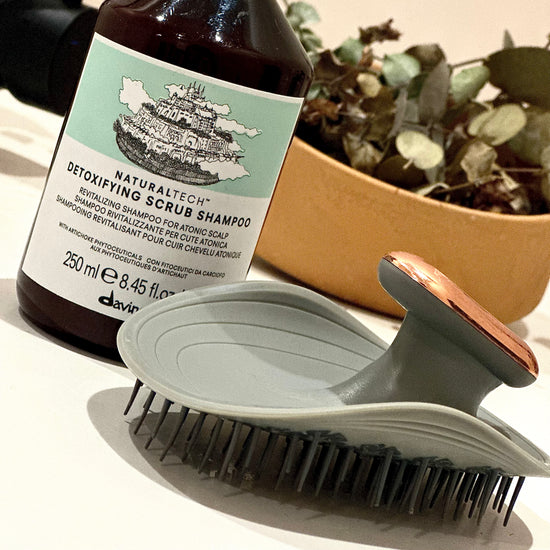
8 Tips for a healthy scalp
Read now!As a professional hairstylist and colourist, I am sharing my 8 top tips to easily take care of your scalp daily.
-
-

Summer & Beach Essentials: Protect Your Hair on Holiday
Protect your hairSun, beach, and holidays: Yes! But not at the expense of your hair condition!
-

Unlock the Secrets to Shiny Hair: Tips for Radiant hair all year long
shiny hairTo help you achieve that glossy look all the time, I wanted you to understand what makes your hair shine and how to care for it properly.
-

Blonde... BUT COOL BLONDE
Pair text with an image to focus on your chosen product, collection, or blog post. Add details on availability, style, or even provide a review.


Edits
8 Tips for healthy scalp
As a professional hairstylist and colourist, I am sharing my 8 top tips to easily take care of your scalp daily.
Over the years, I have noticed that more and more people get chronic scalp issues such as redness, overly oily and sensitive scalp, alopecia areata, dandruff... the list goes on.
Hair is the reflection of your health.
Do you believe in this saying? I do.
Change in your scalp is often a symptom of an underlying condition.
Each transition of our life or state can be affected by the natural shift of our hormones, which directly impacts our scalp and health in general.
Any condition must be considered seriously to be treated; however, how do you take care of your scalp daily to keep it as healthy and fresh as possible while living life to the fullest?
Here are my top 8 tips for YOU, followed by some haircare to help you with your healthy scalp journey.
TIP 1 Do not overwash your hair
Wash your hair too often could cause scalp irritation, and your colour will wash out too quickly.
Refrain from washing your hair 3-4 times a week; instead assess how dirty your hair and scalp are + if there is any dry shampoo build-up justifying a hair wash.
TIP 2 Best hair care or nothing
Do Not pick a product based on how attractive its packaging is or how lovely it will look in your bathroom shelf. Instead, let's aim for clean composition, or as natural as possible, ideally not organic, to ensure your chemically processed hair gets the love it needs.
You can defo rely on Davines.

TIP 3 Avoid harsh products.
If you feel your hair is never clean or too oily, focus on finding the "why" instead of using the strongest cleanser that won't help fix the issue and could make things worse + dry your hair. Instead, treat your scalp with rebalancing treatments rather than cleansing.
TIP 4 Invest in scalp scrub.
We love a scalp scrub, yes, but not any, as some can be very oily, and the scrub could be very irritating too.
My absolute favourite is a shampoo called Detoxifying by Davines; it gently cleanses the scalp and smells of fresh mint... love it!
TIP 5 Reduce the build-ups.
Anything building up causes your scalp to suffocate, and when your scalp cannot breathe, this is when troubles arise; this is why you want to use silicone-free products + avoid using too much dry shampoo ( try this dry shampoo ), especially overly powdery ones.
TIP 6 Use scalp massagers
Scalp massagers are trendy, extremely efficient, and good for your scalp. Use one with soft bristles and bendable material.
You can use manual scalp massagers but you can also use an electric scalp massager; have you ever tried one?
It feels so good! Transform the dreaded hair wash into a blissful moment, and your scalp will absolutely love it!
TIP 7 Scalp serum
Hydrate your scalp with a scalp oil or serum treating your scalp to a lovely fingertips massage. It will enhance the blood flow in the neck and head area and promote hair growth; it also conditions the scalp, helping to prevent flakes and a dry and itchy scalp. Plus, this is such a relaxing moment.
TIP 8 Reduce stress + mind your diet
I am not here to tell you off or judge your diet or lifestyle.
However, here are some facts:
- The subcutaneous blood flow delivers oxygen and nutrients for the hair; if you're not getting certain nutrients from food, you might see the effects in your hair → eat well and do not hesitate to take supplements when needed.
- Stress impacts your hormones and health on so many levels. Stress increases the production of certain hormones and releases pro-inflammatory chemicals that disrupt the skin's barrier function and can trigger skin irritation and inflammation.
I hope my 8 top tips will help you better understand the benefit of caring for your scalp and your hair in general.
Are you a time-poor person? Here is a link to an editable READY-TO-SHOP CART with all my favourite haircare and brushes for a heathy scalp.
Sending you love and positive vibes,
xxx
Clarisse
Blonde balayage
Balayage is not a colour but a versatile technique where we hand paint on hair, and I genuinely believe it can make anybody happy when it comes to low maintenance.
Of course, low maintenance does not mean any home maintenance at all.
In fact, beautiful hair is the result of teamwork. In the salon, we create your dream colour, and your mission is to keep it fresh and alive until your next appointment. Not to mention that keeping your hair will totally serve you in the long run.
I am often asked, "how often shout I wash my hair".
The brutal reality is that every time you wash your hair, your gloss will fade a little more, meaning the less you wash it, the better. This is why a dry Shampoo will be a game changer, but unfortunately - and for your scalp's sake! - you cannot live on it for weeks. Imagine how convenient it would be!
Blonde Balayage edits
Here is my Balayage Edit for YOU my blonde ladies who aim to keep their hair gorgeous and healthy. Let's always aim for the next level.


Hair Routine suggestion
| Shampoo |
If your hair tends to be very dirty when you wash it or if you've been sweating a lot, always do two shampoos.
- Shampoo #1 -DEDE shampoo
- shampoo #2 Heart of glass shampoo
| Conditioner/mask |
Heart of glass intense Treatment once a week and Oi Butter the rest of the time.
| Styling |
- Heat protector and lightweight leave-in conditioner: Heart of glass glaze
- Post styling - will finish with a drop of Oi oil and some Hairspray (anti-humidity).
| Game changer |
- Dry shampoo
- Heart of glass rich conditioner - if you want to cool down your blonde
Blonde but cool
Embrace the fall season
As the vibrant hues of summer begin to fade and we transition into the cosy embrace of fall, our hair often needs some extra TLC.
As a professional colourist and hair stylist, the back-to-school season marks a significant shift in my work.
During this season, many of you, my people, find that their hair and scalp require more attention. After the summer months, sun exposure, saltwater, and chlorine, your hair colour and overall scalp health can take a toll.
But no worries, I've got your back and a list of juicy tips and tricks to help you restore and rejuvenate their hair, ensuring they step into the new season with confidence and style.
"NOTHING LOOKS MORE EXPENSIVE THAN HEALTHY AND SHINY HAIR"
So, how do we transition from summer to fall? Especially if you live in London, you can have both seasons in just one day!
During this transitional phase, Davines' Naturaltech Nourishing haircare range comes to the rescue; it offers a perfect solution to nourish, replenish and protect your hair.
Do you want to know more about the SCIENCE behind the NATURAL TECH NOURISHING treatment?
Davines has long been a pioneer in the world of sustainable and effective hair care. Their reformulated Nourishing family, part of the Naturaltech line, is no exception. This range takes haircare to a whole new level with its combination of science and nature, helping you achieve soft, luscious, and nourished hair even in the face of challenging seasonal changes.
Key ingredients
- Vegetal Keratin: At the heart of the Nourishing range lies Vegetal Keratin, a unique blend of rice protein and a mix of amino acids. This powerhouse ingredient is designed to mimic the natural keratin found in hair, helping to repair and strengthen it from within.
- Biacidic Bond Complex: Developed by Davines' Research and Development Laboratories, the Biacidic Bond Complex is a cutting-edge blend of molecules that seal hair cuticles. BBC locks in moisture but also helps repair the structural integrity of damaged strands, leaving your hair more resilient, smooth, and nourished.
Nourishing Hair and Scalp: A Holistic Approach
I love Davines, and one of the standout features of Davines' Nourishing range that genuinely captivates me is its holistic approach to haircare.
"It's more than just a collection of hair products; it's a complete regimen that understands the interconnectedness of hair and scalp health."
Many haircare brands focus solely on addressing issues like dryness or damage. While that's undoubtedly important, Davines is committed to treating the whole ecosystem of hair health.
The Nourishing range isn't content with temporarily making your hair look good. Instead, it dives deeper, considering the importance of a healthy scalp as the foundation for strong, beautiful hair. A nourished scalp means hair follicles are healthier and better prepared to produce vibrant, resilient strands.
Can you use it all year long?
The Nourishing Range is a treating range, once or twice a year, ideally post-summer and when your hair deeply needs moisture, repair and hydration.
The Nourishing range isn't just about short-term fixes. Its carefully curated ingredients and innovative technology offer long-lasting results that keep your hair looking and feeling its best throughout the fall and beyond. By sealing the hair cuticles and providing deep nourishment, you can enjoy the benefits of healthier hair for an extended period.
Click on the products selected in the link below, you will find all my personal tips!
Additionally, you can customise your order with editable baskets, and you have the option to select your preferred size, whether it's the full size or a convenient sample sachet.
1-Traditional treatment
Includes: a shampoo + a building pack + a hair mask + a Keratin sealer
2- Deep treatment - I also absolutely love a pre-wedding prep; 3 to 6 months before the ceremony, it works wonders for the hair and the scalp.
Includes: a shampoo + a building pack + a hair mask + a Keratin sealer + royal jelly Lotion

The secret for shiny hair
As a colourist, I am obsessed with hair glossiness, but why does shiny hair look so expensive and beautiful?
Shiny hair is a sign of health (NOT WEALTH!) and vitality.
To help you achieve that glossy look all the time, I wanted you to understand what makes your hair shine and how to care for it properly.
Do you know what causes your hair to appear shiny or not?
It might not seem very easy to understand at first, but I am sure that after reading this, it will make sense.
The eye perceives the shine of the hair through the reflection and refraction of light. When light encounters the hair strands, it undergoes several optical processes. The outer layer of the hair, called the cuticle, reflects light, contributing to the overall sheen. Additionally, the hair's internal structure, such as its thickness and smoothness, affects how light interacts with it.
Smooth and well-maintained hair tends to reflect more light, creating a shiny appearance. The natural oils on the hair's surface can also enhance this effect. Ultimately, the eye detects variations in the intensity and quality of light reflected from the hair, allowing us to perceive its shine.
What makes hair shine?
- Natural Oils: Your scalp produces natural oils, such as sebum, that help keep your hair shiny. Avoid over-washing to retain these oils.
- Protein: Your hair is primarily made of a protein called keratin. A protein-rich diet can promote hair health and shine.
- Hydration: Proper hydration, inside and out, is key to shiny hair. Drink water and use a hydrating shampoo and conditioner.
- Avoid Heat Damage: Excessive heat styling can strip your hair of shine. Use heat protectants and limit the use of hot tools.
10 TOP Tips for Shiny Hair
- Balanced Diet: Eat foods rich in protein, vitamins (like Biotin), and minerals (like Zinc) for healthy hair.
- Gentle Washing: Don't wash your hair daily; it can strip natural oils. Opt for a sulfate-free shampoo - The Davines shampoos are sulfate-free.
- Condition Regularly: Use a good-quality conditioner to lock in moisture. Remember to use hair masks at least once a week.
- Cool Rinse: Finish your shower with a cool water rinse to seal the cuticle and boost shine.
- Hair and scalp treatments: Within the scalp, blood vessels supply essential nutrients and oxygen to the hair roots. This nourishment plays a crucial role in promoting hair strength and health. Treating and massaging your scalp contributes to the resilience and vitality of each strand. Therefore, a healthy blood flow is fundamental in nurturing strong and vibrant hair.
- Avoid Tight Hairstyles: Wearing tight hairstyles can lead to hair breakage and dullness.
- Regular trims + gloss in hair salon: Get your hair trimmed if needed; damaged hair does not look good but dull. Getting your hair gloss/toner refreshed is essential as its PH will close the cuticles of your hair and lock in the pigments and shine. They will also intensify your hair colour, warming up or cooling down, making it look fresh and radiant.
- Protect from the Sun: UV rays can damage hair. Use UV-protective products or wear a hat in the sun. Here is a selection for you.
- Choose the Right Products: Io use hair products that are suitable for your hair type. Avoid using products that are too heavy or cleanse too much, even if they are of good quality.
- Silk Pillowcase: Sleeping on a silk pillowcase reduces friction, helping maintain hair's shine.
Conclusion
You can always maintain shiny hair with proper care. To achieve this, focus on maintaining a healthy scalp, protecting your hair from damage, and following a hair care routine that suits your needs. It's important to remember that consistency is key to unlocking the secrets of shiny, lustrous hair.

